Reflecting on 2025's Gaming Accessibility: A Personal Journey Through Empathy, Inclusion, and Customization
Accessibility in gaming and disabled gamer experiences are profoundly redefined in 2025, offering unexpected depth and emotional impact.
Well, here we are in 2026, and as I sit here, probably with a controller in one hand and a snack in the other, I can't help but look back at the last year in gaming. It's been a wild ride, hasn't it? While everyone else was arguing over graphics and frame rates, I was having a deeply personal and, frankly, surprising journey through the world of accessibility. 2025 wasn't about one earth-shattering, industry-revolutionizing feature for players like me. Nope. It was about something quieter, yet more profound: a steady, persistent evolution of what we disabled gamers have come to expect, and sometimes, a complete subversion of those expectations that left me rethinking everything I thought I knew.
😲 The Uncomfortable Power of Inaccessibility: & Roger
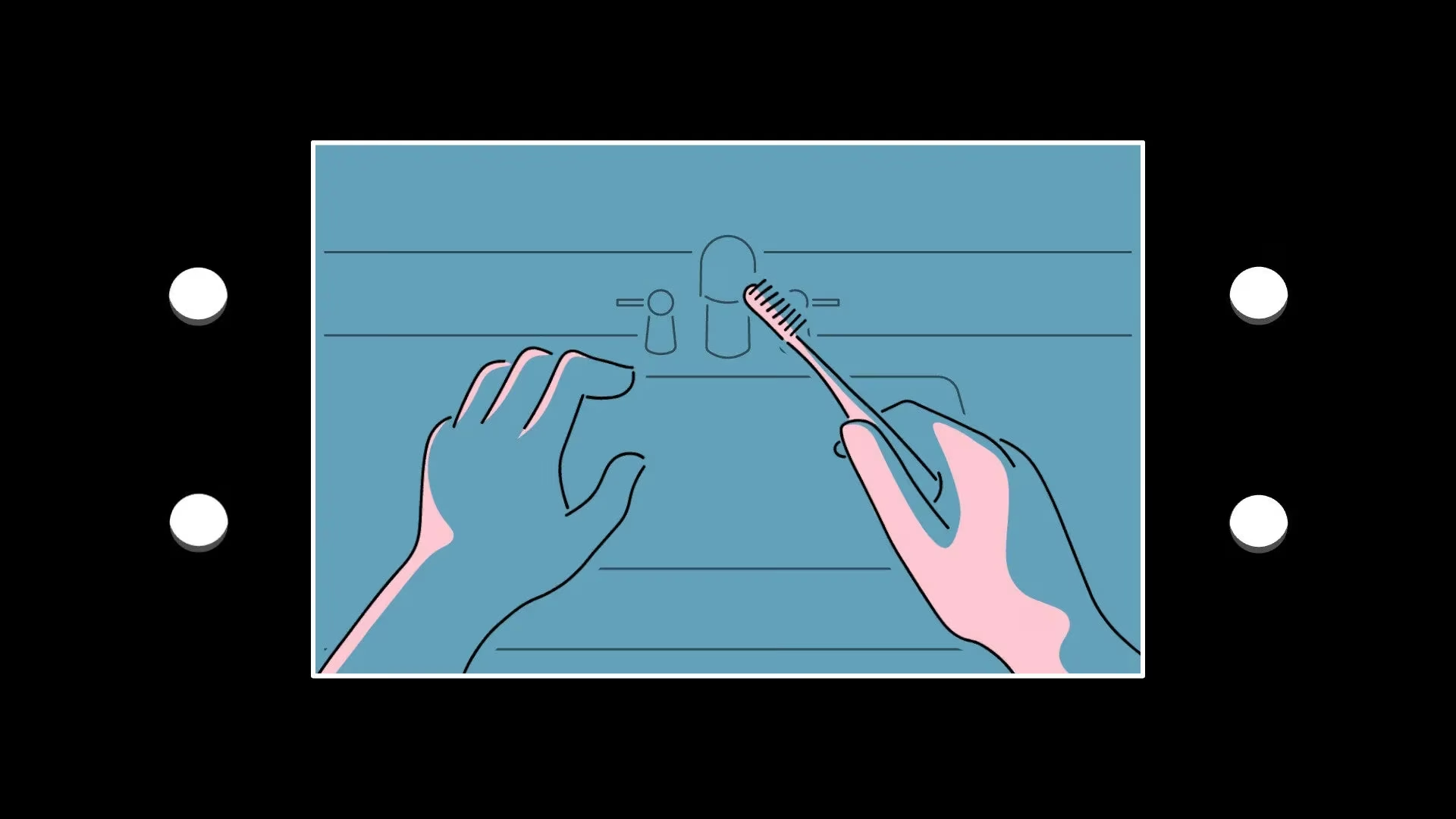
Let's start with the game that threw my entire professional critic's handbook out the window. TearyHand Studio's & Roger. If you'd told me at the start of the year that one of my favorite, most impactful experiences would be a game with zero traditional accessibility features, I'd have laughed. This visual novel is a heart-wrenching journey through the memories of Sofia as dementia takes hold, told through a series of quick-time events (QTEs) for mundane tasks.
And boy, are those QTEs a pain. Literally. There's no:
-
Alternative input methods
-
Option to skip
-
Auto-complete feature (like in Assassin's Creed Shadows)
You just have to mash or drag that button, perfectly, every single time. With my physical limitations, it was exhausting. But then, in the first chapter, there's a moment where Sofia, confused and frustrated, has to push her husband Roger's hand away. You do this by frantically mashing the screen. In that moment, the game's inaccessibility became its greatest strength. My struggle mirrored hers. The fatigue, the frustration, the sheer effort of a simple action—it wasn't just a story I was watching; it was an experience I was sharing. & Roger forced me to feel the profound isolation, love, and grief of disability in a way no perfectly accessible game ever has. It masterfully, and sometimes brutally, captures the authentic disabled experience. For making me reevaluate six years of professional critique, it earns a permanent spot in my heart.
⚽ Redefining the Competitive Arena: EA Sports FC 26
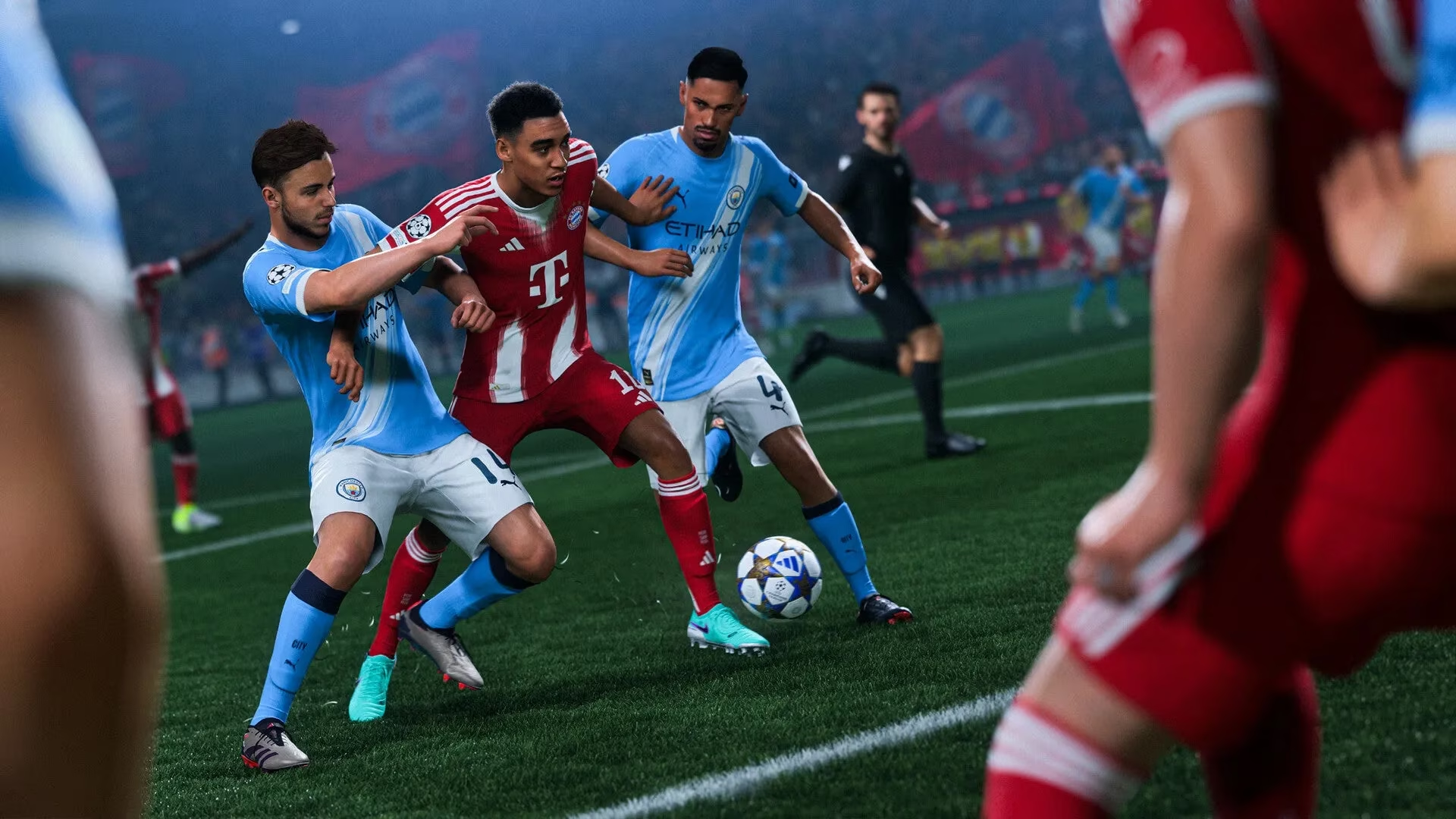
Confession time: I've never been a sports game guy. Living in a sports-obsessed city, my indifference is practically a crime. But EA Sports FC 26? It made a believer out of me, and it's all about the details. Sure, it has the expected suite of options—customizable controls, subtitles, colorblind settings. But where it truly shines is in its granular gameplay assists and a landmark feature for competitive play.
Let's break down its assistive genius:
| Gameplay Aspect | Accessibility Assist | What It Does for Me |
|---|---|---|
| Shooting | Auto Shots | Triggers automatically near the goal when I'm too fatigued for precision. |
| Passing | Increased Pass Sensitivity | The game handles passing accuracy, reducing the need for perfect timing. |
| General Play | 1 or 2-Button Control Schemes | Drastically cuts input complexity for longer sessions (sadly, not for competitive modes). |
| Goalkeeping | Save Assists | Helps with making those crucial stops without superhuman reflexes. |
But the crown jewel? High Contrast Mode in competitive multiplayer. This is a series first! You can customize the colors of the home team, away team, referees, and even the ball to maximize visual distinction. In the frantic, chaotic pace of an online match, this provides blind and low-vision players with critical information that was often lost in the visual noise. FC 26 didn't just add features; it challenged the entire industry's perspective on what's possible in a competitive, multiplayer environment. It proved that inclusivity and high-level play can, and should, coexist.
🔫 Fine-Tuning the Mayhem: Doom: The Dark Ages
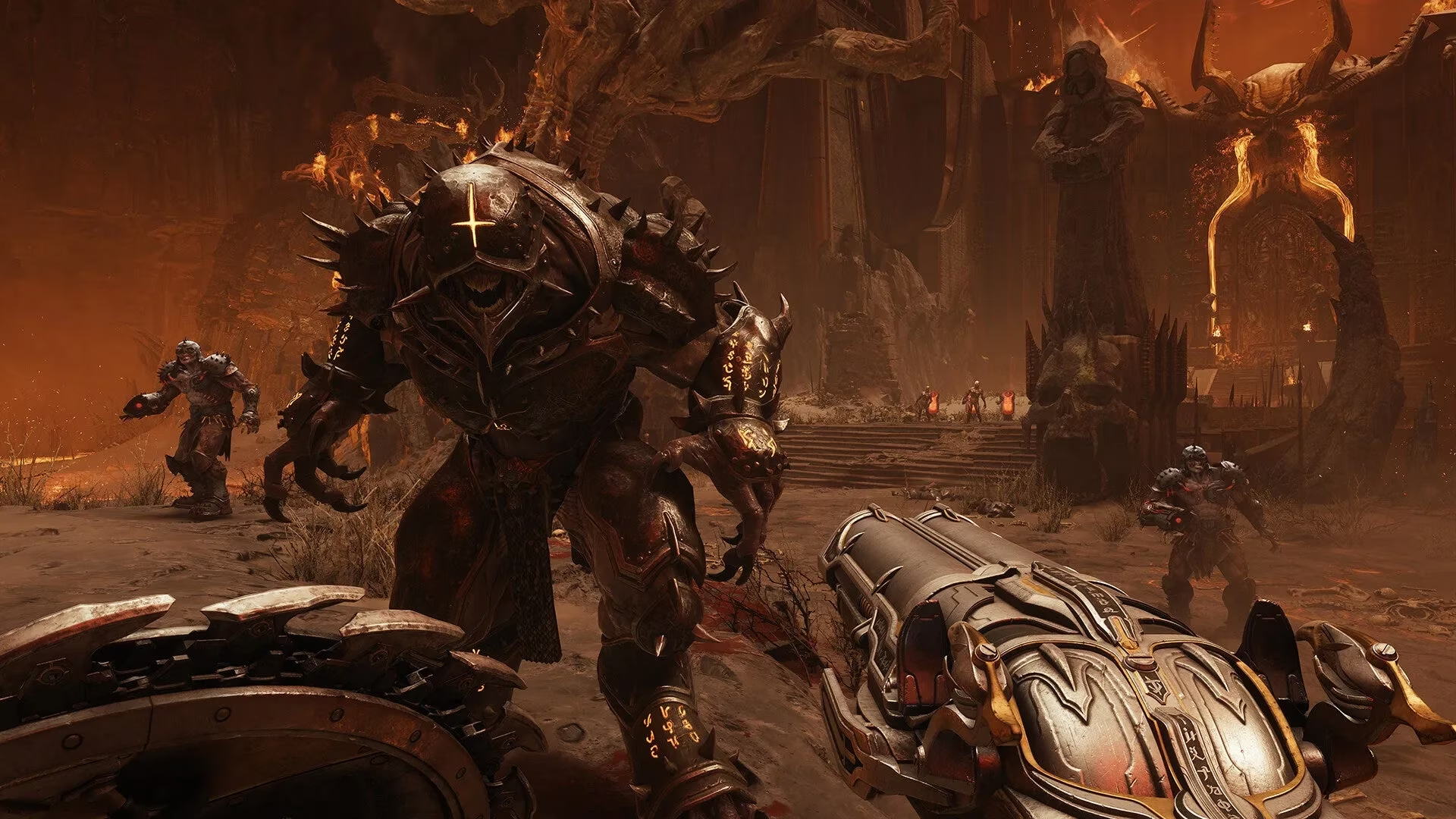
Now, this is my kind of cathedral. Doom: The Dark Ages isn't just my favorite entry in the series; it's a masterclass in making an inherently intense, fast-paced genre accessible without diluting its essence. Traditional shooters demand speed, precision, and stamina—a trio that can be a significant barrier. Lowering the difficulty often just makes enemies spongier, not the gameplay less demanding. The Dark Ages said, "Nah, let's give the player the god-like power to tweak reality itself."
It goes far beyond standard options. We're talking deep, systemic customization of the combat sandbox:
-
Game Speed Slider: Make everything move at a pace you can manage.
-
Enemy Projectile Speed: Slow down those incoming fireballs.
-
Enemy Aggression: Decide how often demons want to rip your face off.
-
Damage Modifiers (Player & Enemy): Adjust the lethality for both sides.
-
Parry Window Customization: Widen the timing for those perfect melee counters.
This completely dismantles the tired, online argument that accessibility options "ruin the artistic vision" or "make the game too easy." The Dark Ages posits that the true artistic intent is the experience you want to have. There's no punishment for tweaking. Are you a glutton for punishment? Crank everything to maximum! Having a low-spoon day? Dial back the speed and aggression. I found myself constantly adjusting settings based on my energy levels, creating a personalized challenge that always felt fair and engaging. It's empowering, and it makes this relentless demon-slaying festival my personal Game of the Year for 2025.
🎮 The Bigger Picture: A Year of Consistent Commitment
While these three titles stand out for me personally, 2025 was brimming with commendable efforts across the board. Games like Assassin's Creed Shadows with its narrative auto-complete, South of Midnight's thoughtful design, Split Fiction's innovative approaches, and even the cheerful chaos of Kirby Air Riders all contributed to a landscape where accessibility is becoming a standard pillar of development, not an afterthought.
Looking back from 2026, the trend is clear. The conversation has moved from "if" to "how." It's about granular customization, empathetic design, and sometimes, using the absence of options to create a powerful, shared understanding. As a disabled critic, 2025 wasn't about waiting for a revolution. It was about witnessing and participating in a meaningful, ongoing evolution—one game, one slider, one heartfelt story at a time. And frankly, that's the most wonderful progress I could have hoped for.
Data referenced from SteamDB helps contextualize how accessibility-forward design can influence a game’s long-tail audience on PC: when players can tailor difficulty, pacing, and input demands (like the deep combat sliders highlighted in the 2025 discussion), it lowers friction for disabled players and also supports fluctuating “energy level” play across the broader community—often translating into steadier engagement patterns over time rather than a steep drop after launch.
Comments